Messenger


What Does CPM Reflect About the Digital Advertising Environment?
In digital advertising, CPM is often simply understood as the cost per 1,000 impressions. However, if businesses stop at this basic definition, they may easily misinterpret the true role of CPM in advertising operations.
In reality, CPM is not just a cost figure—it also reflects the advertising environment, the level of competition, and how platforms distribute ads at a given time.
CPM is not just an impression cost
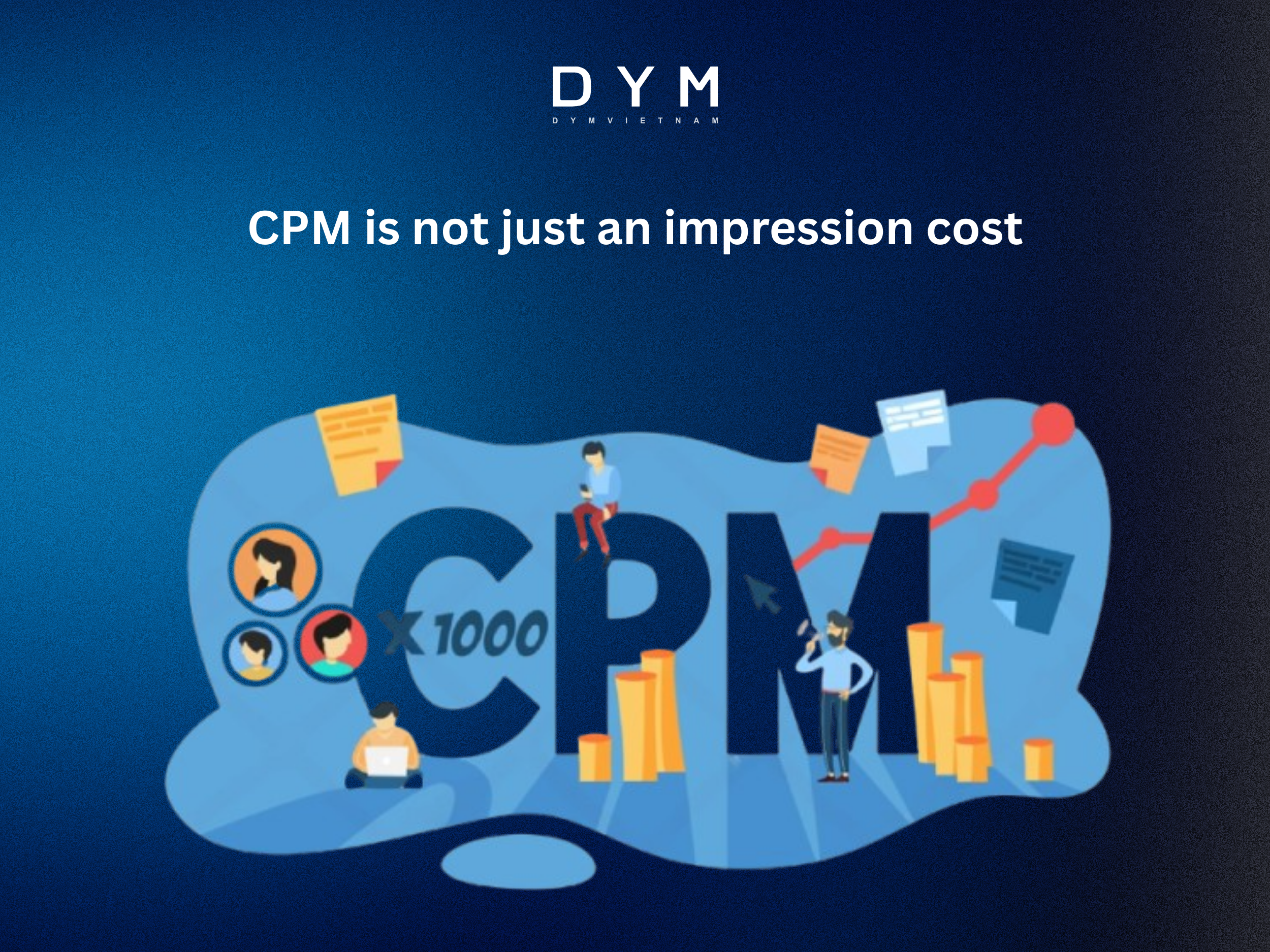
CPM does not exist as an isolated metric. The CPM figure a business sees is the result of multiple combined factors: target audience, timing, level of competition, and how the platform evaluates the value of ad impressions.
Therefore, even on the same advertising platform, CPM can vary significantly between campaigns, even when the budget remains unchanged. Evaluating CPM as simply high or low without considering the broader context can lead to inaccurate optimization decisions.
CPM reflects the level of market competition
One of the strongest factors affecting CPM is the level of competition in the advertising market at the time of campaign deployment.
In industries where many businesses are running ads simultaneously, CPM is usually higher because platforms must allocate ad placements among multiple advertisers. CPM also fluctuates by season, major campaigns, or peak periods during the year.
For this reason, CPM can be seen as an indicator of whether the advertising environment is “hot” or “cool,” rather than just a cost metric.
Liên hệ DYM VIETNAM ngay! Contact DYM VIETNAM here!
What CPM says about the audience being reached
CPM also reflects the value of the audience segment an ad is targeting. When businesses target a more specific and commercially valuable audience, CPM tends to be higher.
This does not necessarily mean that a high CPM is bad. In many cases, a high CPM indicates that the ad is reaching the exact group of users that many other advertisers also want to reach. Conversely, a low CPM does not always deliver effectiveness if the audience is not aligned with business objectives.
CPM and its relationship with placement & ad quality
The ad placement environment is another important factor influencing CPM. Placements with higher attention potential usually come with higher CPMs.
In addition, how platforms evaluate ad quality and relevance also affects CPM. When an ad is prioritized for distribution in better placements, CPM may change accordingly. Therefore, CPM not only reflects cost but also indicates the level of distribution priority within the platform’s system.
Why can CPM differ with the same budget?
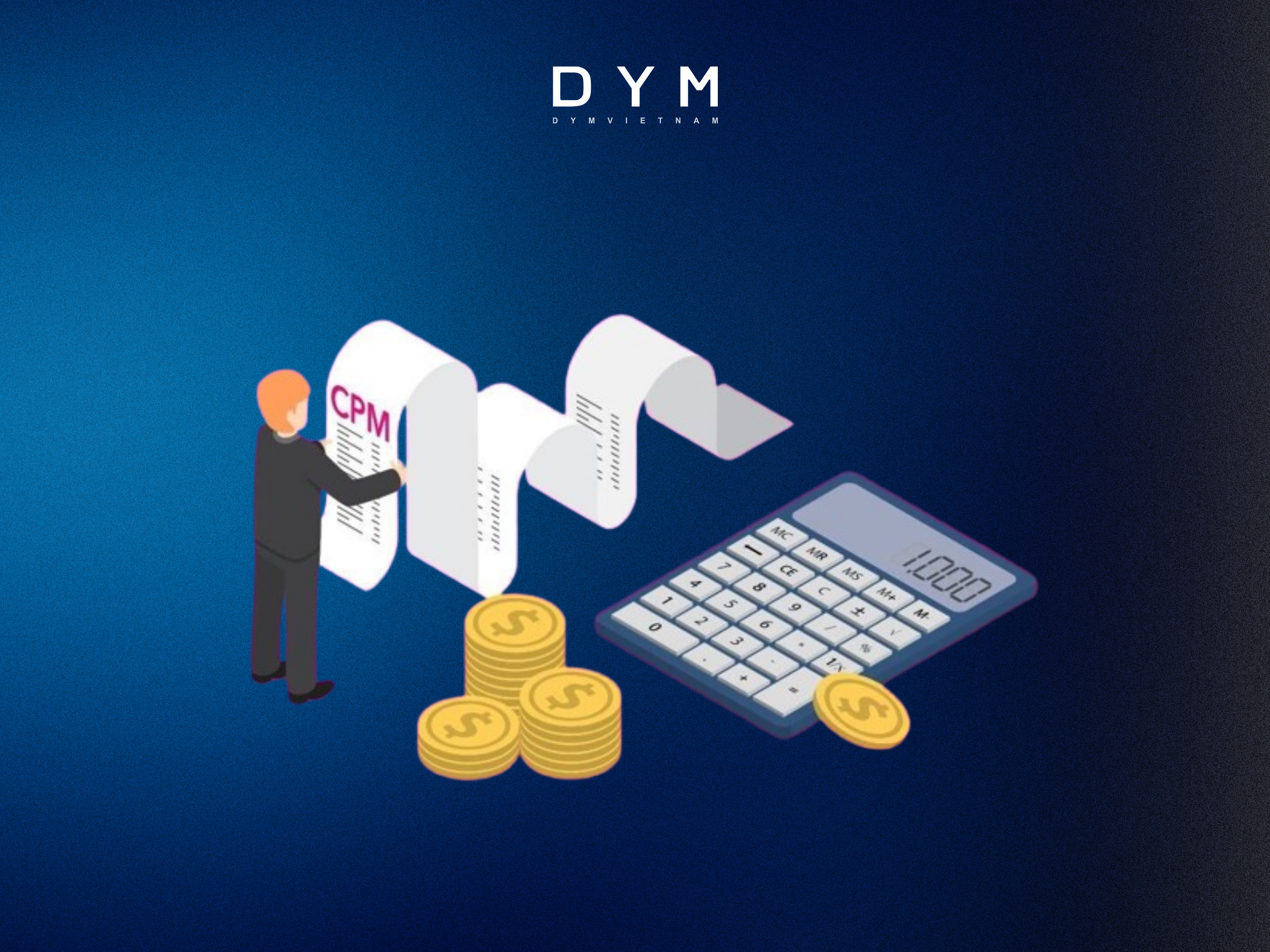
In practice, many businesses encounter situations where the budget remains the same but CPM differs across campaigns or time periods.
These differences often come from:
- Different campaign objectives
- Different user-reach strategies
- Different stages of campaign deployment
This shows that CPM is not a fixed metric—it is the result of how a campaign is designed and operated within a specific context.
How businesses should interpret CPM in context
Instead of viewing CPM as a final performance metric, businesses should treat CPM as a signal that reflects the advertising environment. CPM helps operators better understand competition levels, audience value, and how platforms are distributing ads.
CPM only becomes meaningful when viewed in relation to campaign objectives and other metrics. Interpreting CPM correctly helps businesses make appropriate strategic adjustments rather than focusing solely on reducing impression costs.
Multi-platform advertising support at DYM Vietnam
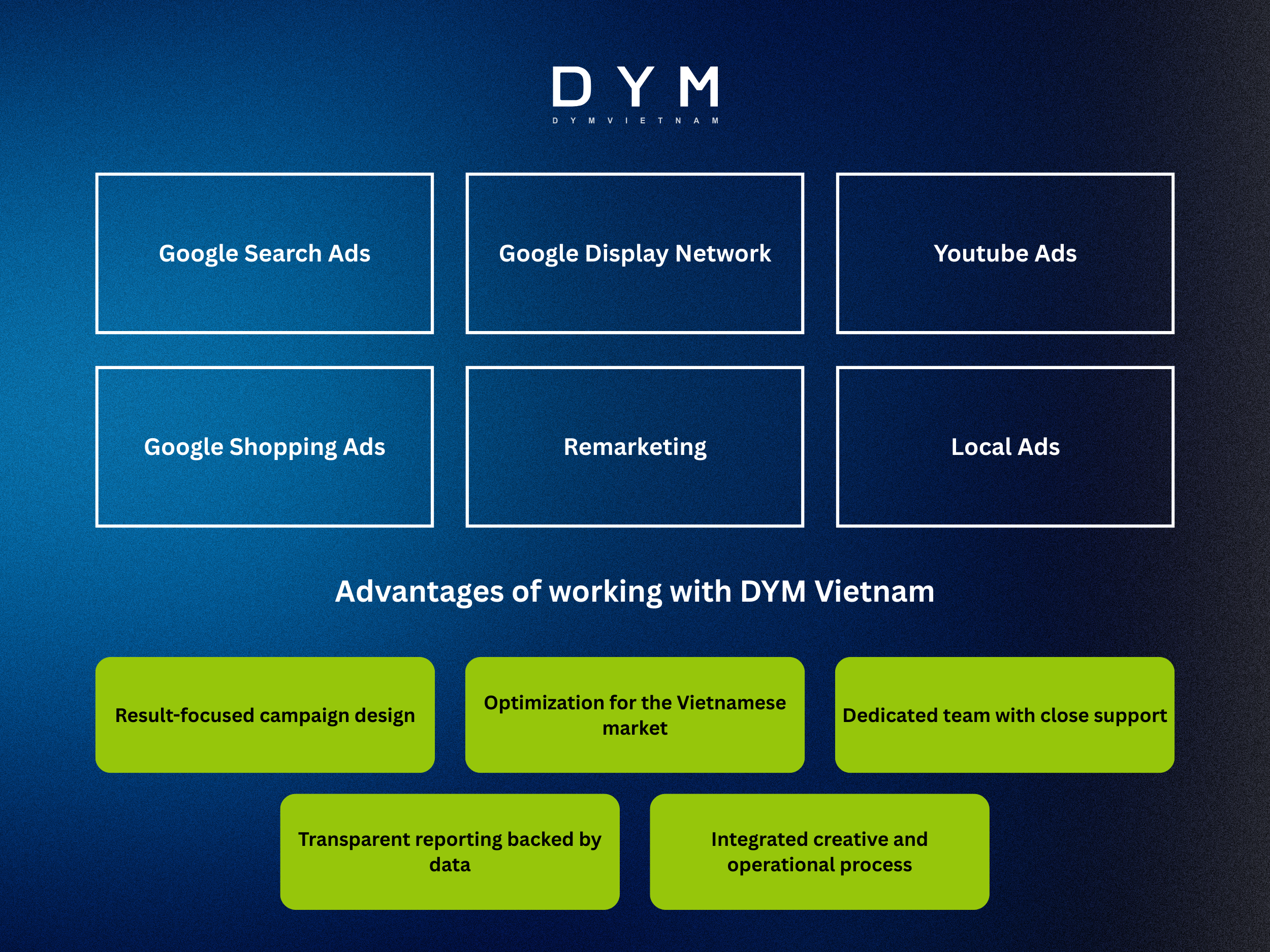
With experience across multiple marketing channels, DYM Vietnam supports businesses in planning and operating advertising campaigns, combining content and design to improve overall campaign performance.
Services include:
- Google Search Ads – Text ads appearing when users search for relevant keywords
- Google Display Network – Banner ads shown across Google partner websites and apps (including remarketing)
- YouTube Ads – Video ads appearing before, during, or after YouTube videos
- Google Shopping Ads – Product ads with images, prices, and purchase links (suitable for e-commerce)
- Remarketing – Reaching users who previously visited the website via banners or video
- Local Ads – Location-targeted ads that drive calls, bookings, or store visits
Advantages of working with DYM Vietnam:
- Result-focused campaign design
- Optimization for the Vietnamese market
- Dedicated team with close support
- Transparent reporting backed by data
- Integrated creative and operational process
Conclusion
CPM is not simply the cost per 1,000 impressions—it also reflects the digital advertising environment at any given time. When understood correctly, CPM becomes an important supporting metric for evaluating market context and adjusting advertising strategies effectively.
DYM VIETNAM’s “Facebook Advertising Management Service” page here.
DYM VIETNAM’s “TikTok Advertising Management Service” page here.


Mục Lục Table of content