Messenger


How to Run Facebook Ads: A Technical Guide for Businesses Seeking Optimal Performance
Running Facebook ads may seem simple on the surface, but to achieve consistent results and optimize costs, businesses need to clearly understand how the Facebook Ads system works and the technical factors that directly affect ad delivery. Many failed campaigns are not the result of Facebook being ineffective, but rather of incorrect setup and optimization that do not align with the platform’s logic.
This article focuses on running Facebook ads from a technical perspective, helping businesses understand each step of the implementation process and avoid common mistakes in ad operations.
Understanding the Facebook Ads Structure Before You Start
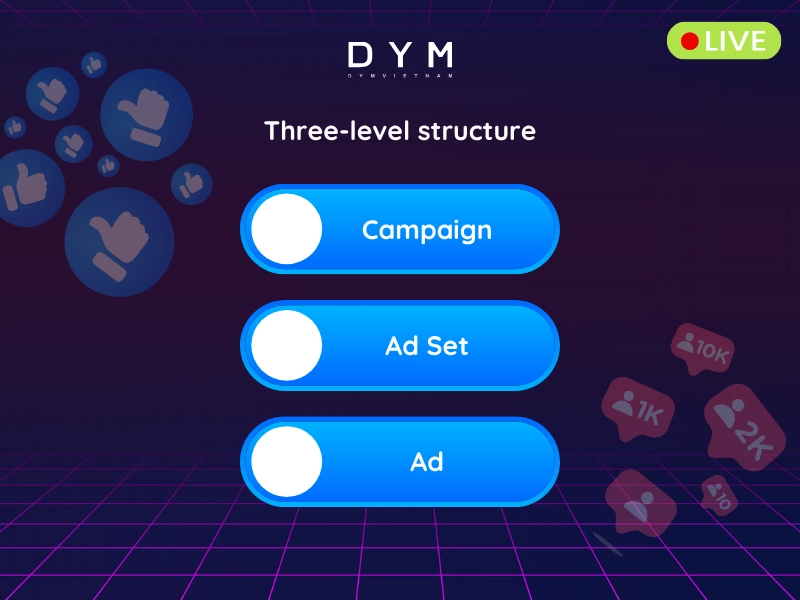
Before creating any campaign, the most important thing is to understand Facebook Ads’ three-level structure: Campaign, Ad Set, and Ad. Each level plays a different role, and optimizing the wrong level can easily lead to underperforming ads.
The Campaign level is where businesses choose their advertising objective, such as brand awareness, traffic, lead generation, or conversion optimization. Facebook uses this objective to decide how to deliver ads, so choosing the wrong objective from the beginning can cause the entire campaign to be misaligned.
The Ad Set level is where you define the audience, budget, schedule, and placements. This level directly determines who sees your ads and in what context. The Ad level is the final element shown to users, including images, videos, copy, and the call-to-action.
Choosing the Right Advertising Objective for Your Business Goals
One of the most common technical mistakes in Facebook advertising is selecting an inappropriate objective. Facebook optimizes strictly based on the objective you choose, not on your actual business expectations.
If your goal is to generate leads or drive sales, choosing objectives like Traffic or Engagement often results in low conversion performance. This is because Facebook will prioritize delivery to users who are more likely to click or interact, not necessarily those who are likely to purchase. In these cases, objectives such as Leads or Sales (Conversions) are more suitable, as the system learns and delivers ads based on conversion behavior.
Contact DYM VIETNAM here!
Setting Up Audiences and Budgets According to Algorithm Logic
At the Ad Set level, audience setup must be carefully considered to avoid two common situations: targeting that is too broad or too narrow. Audiences that are too broad can lead to wasted budget, while audiences that are too narrow can drive up CPM and limit delivery.
In the early stages, Facebook needs data to learn user behavior, so businesses should prioritize sufficiently large audiences and avoid stacking too many targeting conditions. Once conversion data is available, using Custom Audiences and Lookalike Audiences can significantly improve audience quality and cost efficiency.
Regarding budget, sudden increases or decreases, or frequent changes within a short period, can reset the campaign’s Learning Phase. Therefore, budget adjustments should be made gradually and based on data rather than intuition.
The Role of Ad Creative in Delivery Performance
Although this article focuses on technical aspects, ad creative still plays a major role in distribution performance. Facebook evaluates ad quality through metrics such as click-through rate (CTR), engagement, and user feedback.
An effective ad creative does not only require clear images or videos, but also needs to align with how users consume content on social media. The message should get straight to the point, clearly highlighting benefits or addressing customer pain points within the first few seconds, rather than being overly long or indirect.
Running multiple ad creatives in parallel allows Facebook to gather comparative data and prioritize delivery of the best-performing ads, instead of relying on a single creative.
Conversion Tracking – A Mandatory Technical Element
If a business runs Facebook ads with conversion objectives but does not properly install the Facebook Pixel or Conversion API, the campaign is almost impossible to optimize effectively. Tracking allows Facebook to understand user behavior after they click on an ad, enabling the system to learn and deliver ads to users with similar behaviors.
Common events such as View Content, Lead, Add to Cart, and Purchase must be set up correctly and checked regularly to ensure accurate data collection. When tracking functions properly, Facebook Ads has the necessary foundation to optimize costs and improve conversion quality.
Monitoring Data and Optimizing Campaigns Correctly
After ads are launched, data should be monitored consistently rather than focusing only on final results. Metrics such as CPM, CTR, CPC, number of conversions, and cost per conversion reflect the health of the campaign at different stages.
If an ad has a low CTR, the issue often lies in the creative or audience mismatch. If there are many clicks but few conversions, the problem may come from the landing page or lead handling process. Optimization should be based on specific data to accurately identify bottlenecks, instead of randomly turning ads on and off.
Conclusion
Effective Facebook advertising does not depend on fast setup or large budgets, but on a correct understanding of the system structure, appropriate objective selection, logical audience setup, and disciplined data tracking. When these technical elements are implemented correctly, Facebook Ads remains one of the most powerful channels for businesses to expand their customer base and achieve sustainable growth.
DYM VIETNAM’s “Facebook Advertising Management Service” page here.


Table of content