Messenger


What is CTR? How to Effectively Improve CTR in Advertising
CTR (Click-Through Rate) is one of the most important metrics in digital marketing. It shows whether your ad content or search result is compelling enough to attract users. Understanding how CTR works and optimizing it helps businesses improve visibility, reduce wasted budget, and enhance overall campaign performance.
What is CTR in Digital Marketing?

CTR stands for Click Through Rate. It is commonly translated as the ratio of clicks, meaning the percentage of users who click on an advertisement or link compared to the number of times that content is displayed.
If an ad, search result, or website link appears many times but receives few clicks, the CTR will be low. Conversely, if it consistently attracts clicks whenever displayed, the CTR will be high.
CTR Formula
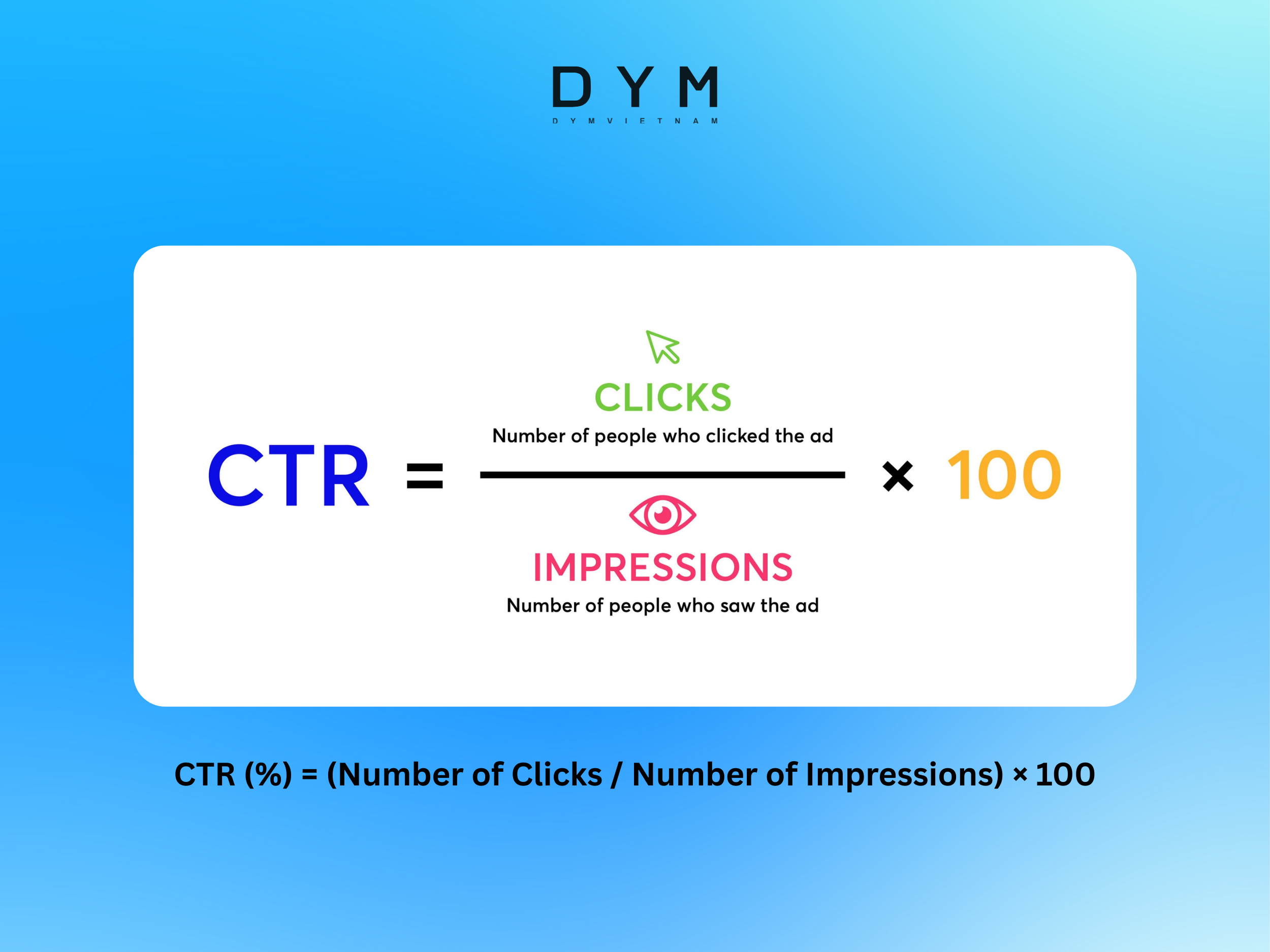
CTR (%) = (Number of Clicks / Number of Impressions) × 100
For example, if a Google advertising campaign is shown 10,000 times and receives 300 clicks:
CTR = (300 / 10.000) × 100 = 3%
This means that out of every 100 impressions, users click on the ad about 3 times.
With this formula, marketers can quickly identify which content is engaging users and which content requires further optimization.
The Role of CTR in Marketing Activities
Evaluating Content Attractiveness
- CTR shows whether displayed ads or content are appealing.
- Low CTR: headline/image/message may not be suitable. High CTR: content matches user needs, clear presentation, strong CTA.
- It is often the first metric reviewed when assessing ad quality.
Impact on Advertising Costs
- On Google Ads, CTR affects Quality Score — higher scores lead to better positions and lower CPC.
- Ads with strong CTR are prioritized by the system → More clicks can be gained at lower cost (especially in search ads).
Relation to Traffic Quality
- With proper targeting, high CTR often brings higher-quality traffic that converts more easily if the landing page is clear and the conversion flow is simple.
- CTR indirectly impacts leads, orders, and revenue.
Basis for Comparison & Optimization
- CTR helps compare groups, creatives, or channels to identify what works, needs improvement, or should be stopped.
- Holistic analysis: Evaluate CTR alongside CPC, CPA (cost per conversion), revenue, and ROAS to make data-driven decisions.
Liên hệ DYM VIETNAM ngay! Contact DYM VIETNAM here!
Factors Affecting CTR
Content, Headlines, CTA
- Headlines should be clear, concise, and keyword-focused; descriptions should answer what users gain by clicking.
- Specific CTAs (“Learn More,” “Sign Up Now,” “Get Free Consultation”).
- In SEO, title tags and meta descriptions strongly influence search result CTR.
Target Audience Accuracy
- Targeting the right audience (e.g., visitors, product viewers, cart adders, lookalike audiences) improves CTR.
- Targeting too broadly / not excluding unsuitable audiences → lower CTR, higher costs.
Placement & Format
- Top positions in search results generally get higher CTR.
- Eye-catching formats (full-screen vertical video, multi-image collections) often increase clicks.
Landing Page Experience & Consistency
- If ads promise one thing but the landing page shows another → users leave, systems may rate relevance lower, affecting distribution and indirectly CTR.
- Need consistency between ad and landing (message/offer/product).
Brand & Trustworthiness
- Users prefer clicking familiar and trustworthy brands.
- Ratings, reviews, certifications, or awards shown in ads or landing pages strengthen CTR.
What CTR Is Considered Good?
- There is no universal benchmark. A “good” CTR depends on industry, channel, goals, and context.
- By Channel:
- Search ads: usually higher CTR because users actively search.
- Display/banner ads: lower CTR but useful for brand awareness.
- Social media: CTR depends on content, audience, frequency, and campaign goals; same industry, different goals → different CTR expectations.
- Use benchmarks flexibly: You can refer to average CTR by industry/channel to see whether you’re above, below, or in line with the norm. However, they should only be used as guidance.
- Most importantly: focus on trends and overall effectiveness. Check whether CTR improves over time and whether conversion rates and costs are reasonable.
- Compare with your own historical data. Benchmark against the same industry, product category, or seasonality to understand the impact of changes in content, targeting, and landing pages. If CTR increases, conversions remain stable or improve, and cost per conversion is reasonable → that’s a ‘good’ CTR in your context.
How to Optimize CTR on Major Channels (Facebook, TikTok, SEO, Google Ads)
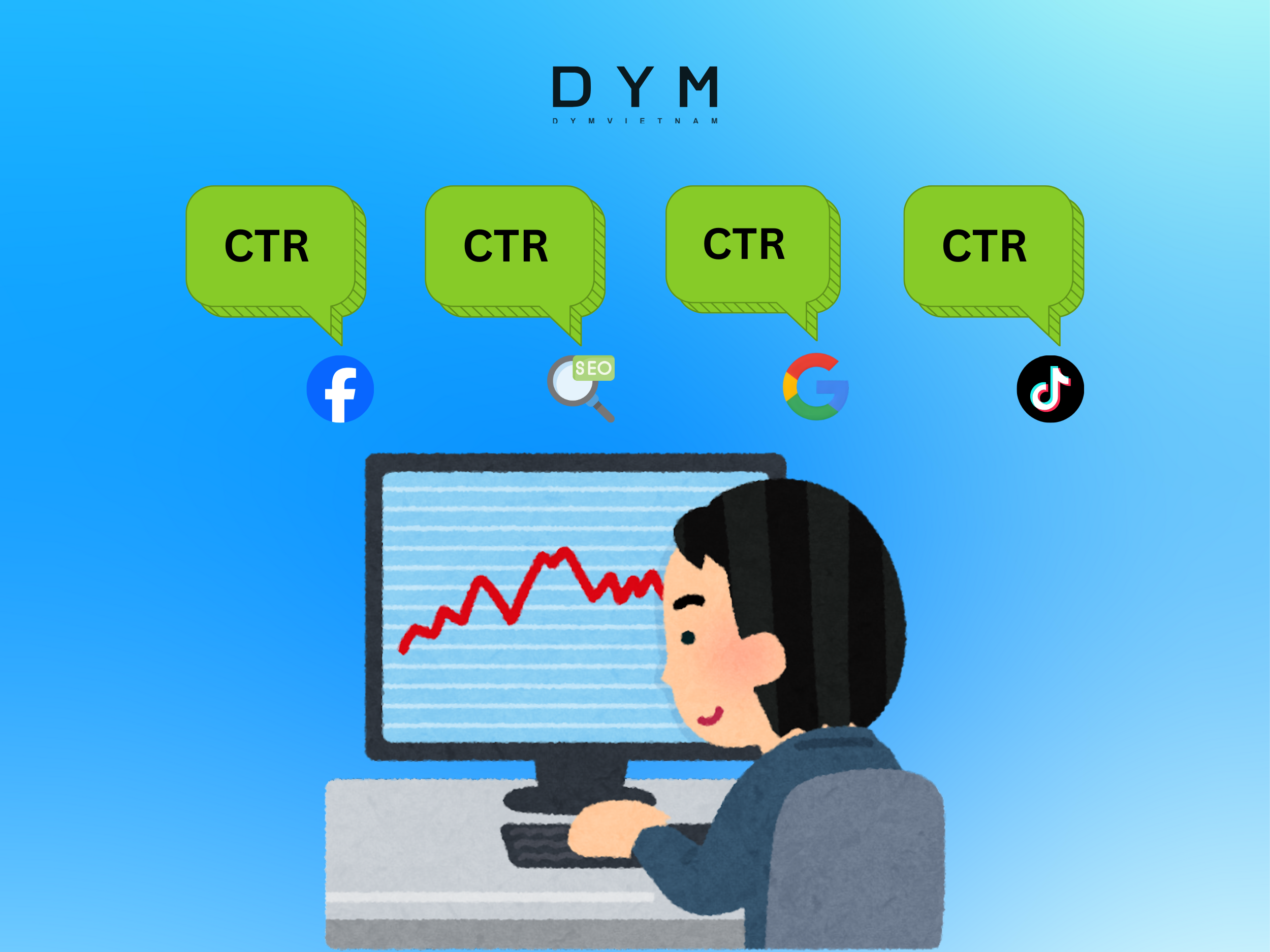
General principle: engaging content delivered to the right audience in the right context.
Optimizing CTR for Facebook Ads
- Use clear, easy-to-understand images and videos.
- An opening line that addresses audience needs; a clear call to action.
- Target the right audience: interests, behaviors, website visitors, and people who have messaged before.
- Run A/B tests with multiple variations and keep the ones with higher CTR.
Optimizing CTR for Google Ads
- Use tightly grouped keywords; align ad content with queries.
- Use sufficient ad extensions: sitelinks, additional descriptions, promotions, phone numbers, addresses.
- Landing page aligned with the ad: visitors immediately see the promised information/offers/products.
Optimizing CTR for SEO
- Titles include main keywords and highlight content benefits.
- A brief description summarizing “what readers will get when they click”.
- Add structured data to increase the chances of appearing in featured snippets, helping improve CTR.
Optimizing CTR for TikTok Ads
- Vertical videos, fast-paced, get straight to the point in the first few seconds.
- Natural content, avoid a forced “advertising” feel.
- Leverage reviews and user experiences.
- Monitor view rate + CTR, increase budget for high-performing videos.
Is Higher CTR Always Better?
Not necessarily. High CTR indicates attraction but does not guarantee business effectiveness.
Common Risks When Focusing Only on CTR:
- Curiosity clicks: catchy headlines/images attract clicks but don’t match landing content → low conversions, higher cost per conversion.
- Wrong audience: many clicks from irrelevant users → wasted spend.
Proper Evaluation:
- Always assess CTR alongside conversion rate, conversion cost, and ROAS.
- The goal is to optimize CTR within the context of the overall campaign so that each click has the potential to generate results (orders, leads, revenue).
=> Higher CTR is only beneficial when paired with good conversions and reasonable costs.
Comprehensive Advertising Services from DYM VN
With over 10 years of experience in the Japanese market, DYM VN provides multi-platform advertising services with professional, efficient, and transparent processes.
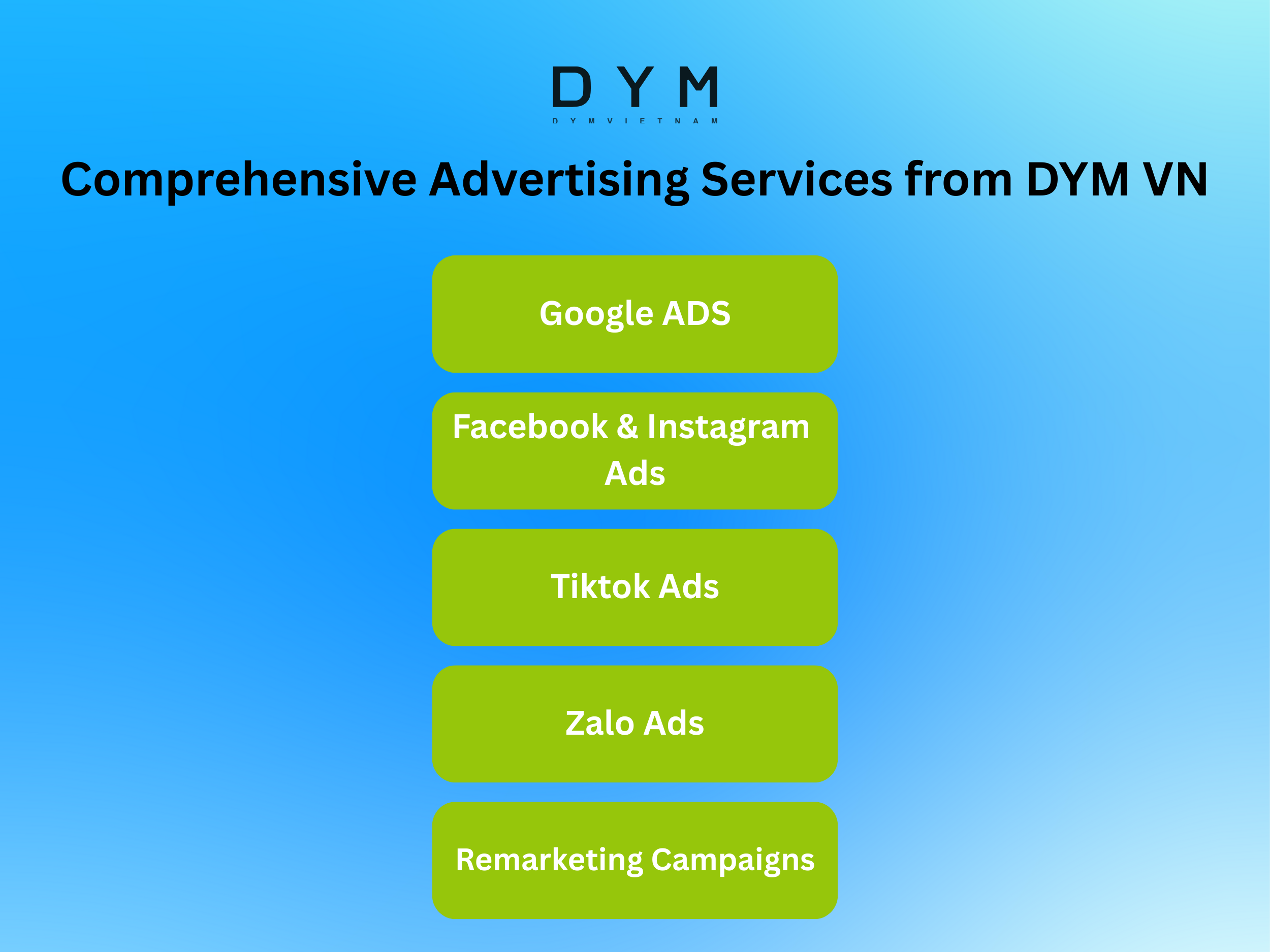
Services Include
- Google Ads (Search, Display, YouTube) – reach users with real demand.
- Facebook & Instagram Ads – build communities and engagement.
- TikTok Ads – spread creative content to younger audiences.
- Zalo Ads – access potential Vietnamese customers.
- Remarketing Campaigns – remind and convert past users.
Advantages of Partnering with DYM VN
- Personalized strategy tailored to each business objective.
- Highly experienced expert team in SEO, SEM, and Digital Ads.
- Transparent reporting, detailed measurement of each campaign’s performance.
- Advertising budget optimization to deliver the highest ROI.
Conclusion
CTR, or Click-Through Rate, indicates how attractive ads or displayed content are in encouraging user clicks. Understanding CTR, knowing how to calculate it, and optimizing it across channels (Google, Facebook, TikTok, SEO), while analyzing it alongside conversion rates and costs, helps businesses reduce budget waste and improve overall digital marketing effectiveness.
DYM VIETNAM’s “Advertising Outsourcing Service” page here.


Mục Lục Table of content