Messenger


AI SEO Case Study in the Study Abroad Industry: Building a Sustainable Lead Generation System through Content and Data Strategy
In the study abroad industry, SEO is not simply a game of traffic. It is a challenge of trust, timing, and the ability to guide decision-making. Parents and students do not make decisions immediately after reading a single article. They take time to research, compare multiple providers, evaluate costs, worry about visas and outcomes, assess the credibility of consulting agencies, and consider the suitability of each study destination.
For this reason, if SEO is implemented in a traditional way, businesses often face a very common problem: rankings improve and traffic increases, but leads do not grow proportionally. Users visit the website, read the content, and leave. The content system creates visibility, but fails to generate conversions.
This is where AI SEO demonstrates its true value—not by simply “producing content faster,” but by building a content system that accurately understands search intent, addresses users’ real concerns, and effectively guides them toward registering for a consultation.
Initial Context: Content Exists, but There Is No Conversion System in Place
This case study applies to a study abroad consulting firm operating in a highly competitive market. The business already had a website and had been implementing SEO content for a considerable period, but the results did not meet expectations.
The issue was not a lack of SEO efforts, but rather that the content system was built in a fragmented way. Each article focused on a separate topic and was optimized for an individual keyword, but they were not connected into a cohesive user journey. The content mainly stopped at providing information, while users in the study abroad sector need more than that—they need reassurance, comparisons, clear explanations, and ultimately guidance toward taking action.
In addition, most of the content was executed in a way that was “technically correct” but not psychologically aligned with user needs. The articles included the right keywords, but failed to address the real questions that parents and students genuinely care about. This is why the traffic did not convert into leads.
Core Strategy: Not Creating Fragmented Content, but Building a Decision-Making Journey
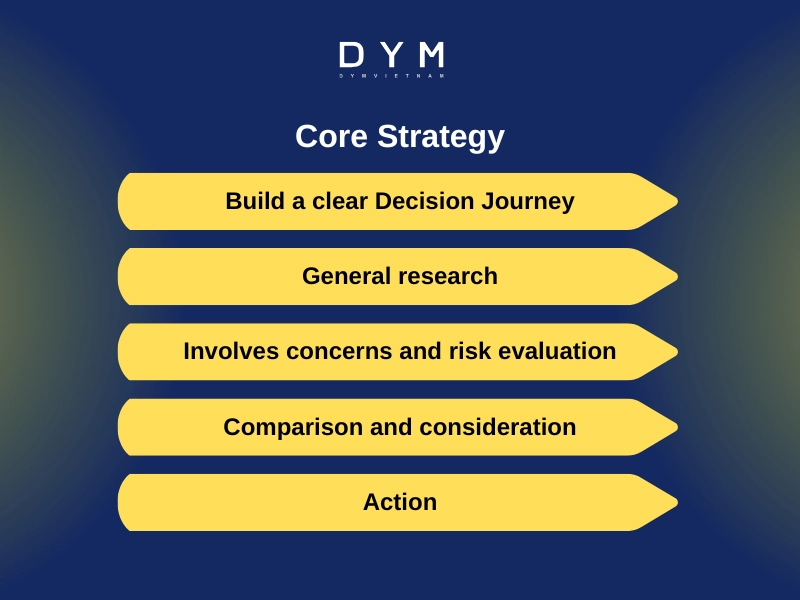
When looking at the overall problem, the key point is not how many more articles are needed, but whether the business can build a clear decision journey. Users in the study abroad industry typically go through four stages:
The first stage is general research. They want to know which country to study in, the requirements, the costs, and what documents are needed.
The next stage involves concerns and risk evaluation. They begin to ask questions such as: Is it difficult? Is there a risk of visa rejection? Will there be unexpected costs? Is it suitable for their academic ability and financial situation?
The third stage is comparison and consideration. They look for which agency is reputable, which country is more suitable, which program is better, and which provider offers more dedicated support.
The final stage is action. Only when they have enough trust do they leave their information, register for consultation, or request application support.
If content is not designed around this sequence, SEO will only generate short-term traffic instead of driving real conversions.
Contact DYM VIETNAM here!
How to Implement AI SEO with a Strategic Approach
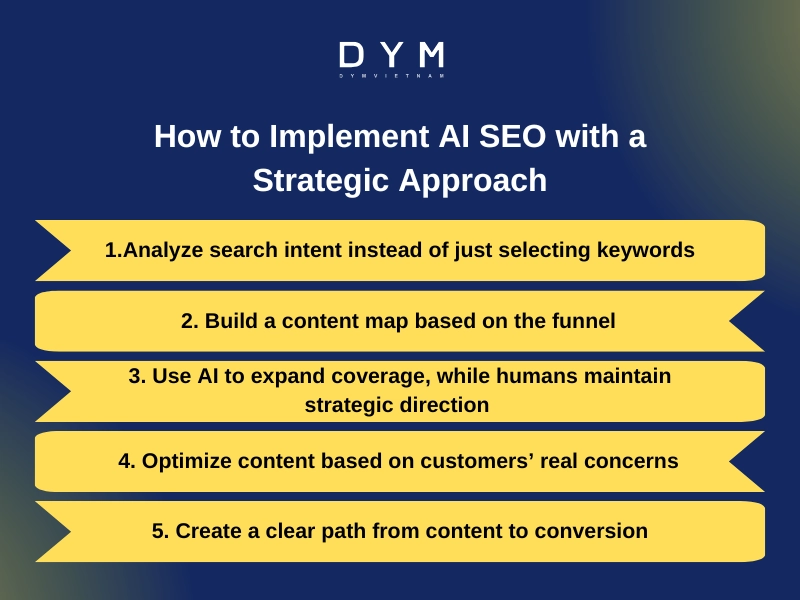
Analyze search intent instead of just selecting keywords
The first step is not to compile a list of keywords and start writing articles. The first step is to use AI to analyze which stage of the decision-making journey the searcher is in.
For example, in the study abroad industry, even with the same topic “studying in Japan,” search intent can vary significantly. Some users are looking for admission requirements. Others are concerned about actual costs. Some are comparing Japan and Korea, while others are already ready to seek consultation.
AI helps consolidate these search signals and classify content based on its role within the funnel.
Instead of writing content just to “include keywords,” businesses begin creating content that addresses the user’s specific stage in their journey.
Build a content map based on the funnel
After understanding search intent, the content system is designed in three layers.
The first layer is attraction content. This group of articles answers common, foundational questions and helps drive traffic from the right audience segment.
The second layer is trust-building content. These articles go deeper into comparisons, analysis, risk explanations, reviews, and real-life scenarios. The goal of this layer is not just to increase views, but to make readers feel: “This provider truly understands my concerns.”
The third layer is conversion content. This includes articles and landing pages designed to guide readers toward specific actions, such as registering for a consultation, checking their profile, or receiving a suitable roadmap.
The key point is that these three layers must be tightly connected. Users should not be left behind in the middle of their journey.
Use AI to expand coverage, while humans maintain strategic direction
In this case study, AI was not used to mass-produce mechanical content. Instead, it was applied to accelerate key strategic tasks:
- extracting common user questions
- suggesting relevant keyword clusters and entities
- proposing content structures based on search intent
- identifying content gaps from competitors
- recommending improvements to enhance credibility
After that, humans take on the most critical role: refining industry insights, shaping brand voice, crafting persuasive messaging, and optimizing appropriate CTAs.
In other words, AI helps businesses scale, but strategy is what ultimately determines whether content can drive conversions.
Optimize content based on customers’ real concerns
Users in the study abroad industry are not just looking for information. They are trying to reduce risk before making a major decision. Therefore, the content must address the real, often uncomfortable questions in their minds.
They don’t just ask, “How much does it cost?”—they also ask, “Will there be additional hidden costs?” They don’t just ask, “Is it possible to go?”—they also ask, “What happens if the application is weak?” They don’t just ask, “Which agency is good?”—they also ask, “Which agency is trustworthy enough to entrust my child’s future to?”
When content answers these concerns, traffic begins to turn into trust. And trust is the foundation of lead generation.
Create a clear path from content to conversion
An article within an AI SEO system for the study abroad industry should not end with “reading and leaving.” Each piece of content needs a clear next step.
For example, after reading an article about study abroad requirements, users can be invited to check their profile for free. After reading a country comparison article, they can receive consultation tailored to their personal goals. After reading about costs, they can request a detailed cost estimate.
This is the key difference between content created solely for SEO and content designed to generate revenue.
Strategic Outcomes to Aim For
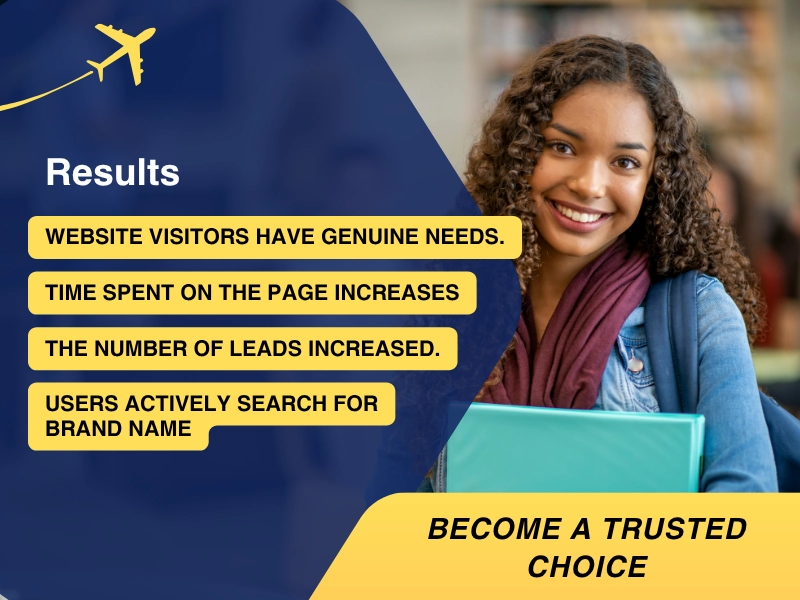
When the system is implemented correctly, the results go beyond just increased traffic. More importantly:
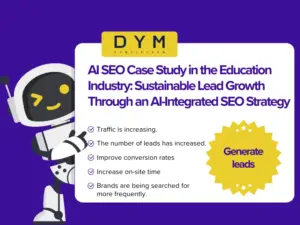
Traffic becomes more qualified. Visitors come with real intent, rather than just browsing casually.
Time on site increases. This indicates that the content is engaging and capable of building trust.
The number of leads grows. This is the most important indicator of an effective SEO system in the study abroad industry.
Brand searches increase. When users actively search for the brand name, it means the content has built a strong level of credibility.
Key Takeaways
AI SEO in the study abroad industry is not about “which tools to use.” It is about how to build a content system that can understand customers, reduce their perceived risks, and guide them toward a specific decision.
Businesses that focus only on traffic are likely to fall into the trap of “having readers but no customers.” In contrast, those that design content around the decision-making journey gain a much stronger long-term advantage.
AI SEO Implementation Solutions for Study Abroad Businesses
To make AI SEO truly effective in the study abroad industry, businesses need to combine three key elements: SEO to attract the right audience, content to build trust, and advertising for remarketing or accelerating conversions. When these three components work together, the system can deliver sustainable results.
DYM Vietnam – Integrated AI SEO and Advertising Solutions
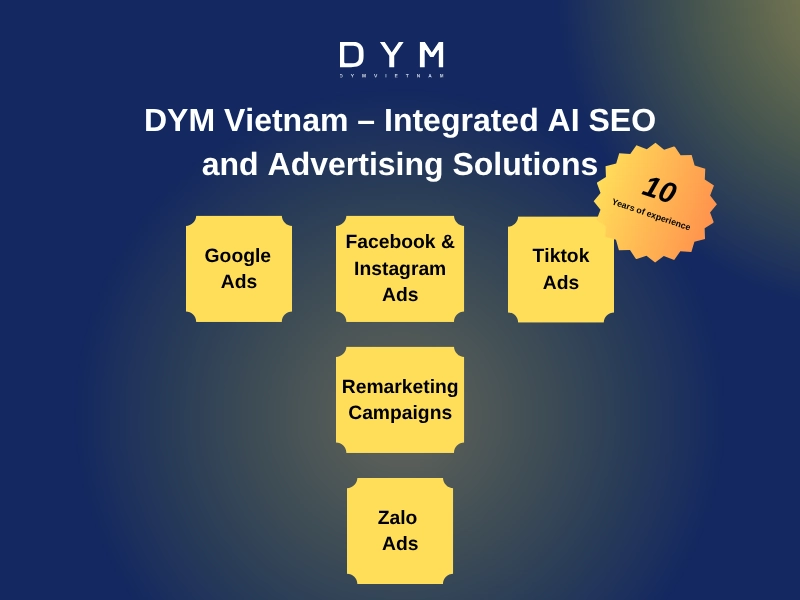
With over 10 years of experience in the Japanese market, DYM Vietnam provides multi-platform advertising services with a professional, efficient, and transparent process.
Services include Google Ads (Search, Display, YouTube), Facebook & Instagram Ads, TikTok Ads, Zalo Ads, and remarketing campaigns—helping businesses reach the right audience at each stage of the decision-making journey.
A key advantage of partnering with DYM Vietnam is its tailored strategy aligned with each business’s goals, a team of experts experienced in SEO, SEM, and digital advertising, and a transparent reporting system that clearly measures campaign performance. In addition, budget optimization contributes to improving ROI in a meaningful way.
This serves as a strong foundation for businesses not only to optimize SEO but also to fully leverage LLMO in their overall marketing strategy.
Conclusion
In the study abroad industry, AI SEO does not just help businesses appear more frequently on Google. More importantly, it helps the brand become a trusted choice in a decision that involves high risk and long-term consideration.
When implemented correctly, AI SEO is no longer just a content technique. It becomes a growth system—where data, search behavior, and conversion strategy work together to generate high-quality leads.
This is the “SEO Services” page of DYM VIETNAM.


Table of content