Messenger


AI SEO Case Study for the Credit Card Industry: Building a Scalable Content System for Sustainable Lead Growth
In the credit card industry, SEO is not just about driving traffic or ranking for keywords. It is a challenge of building trust, delivering relevance, and influencing decision-making. Users searching for credit card information rarely take action immediately. Instead, they carefully compare annual fees, interest rates, rewards, application requirements, and the credibility of the card issuer.
That is why traditional SEO strategies — simply creating keyword-focused articles and waiting for rankings — often fail to generate real business results. A website may attract traffic, but struggle to convert visitors into actual card applications. Users read the content, gather information, and leave without taking the next step.
This is where AI SEO becomes a strategic advantage. Its role is not to mass-produce content, but to build an intelligent content ecosystem that understands search intent, addresses customer concerns at the right moment, and naturally guides users toward conversion.
Initial Challenge: Strong Traffic, Low Conversion Rates
In this case, the business operates in the personal finance sector, offering and distributing credit card products to a wide range of customer segments. The website already had SEO articles and landing pages in place, but the overall performance was not delivering the expected results.
The issue was not a lack of content. The real challenge was that the content strategy was fragmented. Each article was optimized for individual keywords, yet there was no clear content journey guiding users from awareness to conversion. Most articles focused only on providing general information, while credit card users typically need much more than that — they want reassurance, detailed comparisons, and a clear understanding of why a specific card fits their financial needs.
Another critical problem was that the content failed to address the deeper concerns of users. In the financial industry, people are not only looking for the “best” option; they also want to know what is secure, transparent, and trustworthy. Without addressing these psychological factors, even strong traffic numbers are unlikely to convert into qualified leads.
Strategic Objectives
Before implementation, the strategy was clearly defined: SEO would not be optimized simply to generate page views, but to build a content ecosystem that supports user decision-making.
The first objective was to increase qualified organic traffic by attracting users who genuinely have an interest in exploring credit card options.
The second objective was to improve conversion rates, including credit card applications and consultation inquiries.
The third objective was to create a trustworthy content system that gives users the confidence to move from the research stage to taking action.
In other words, SEO in the credit card industry should not be viewed merely as a channel for driving website traffic. It should be designed as an early-stage financial advisory tool that guides users throughout their decision-making journey.
Liên hệ DYM VIETNAM ngay! Contact DYM VIETNAM here!
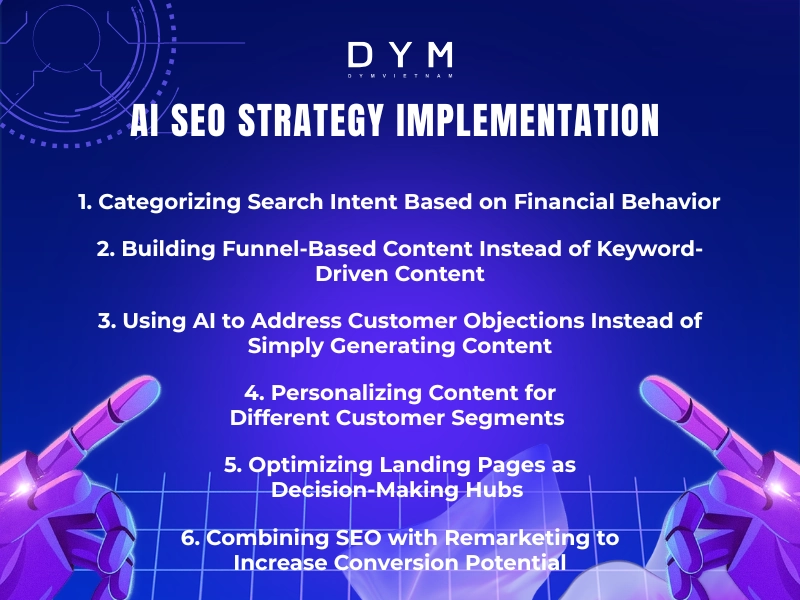
AI SEO Strategy Implementation
Categorizing Search Intent Based on Financial Behavior
The first step was not content creation, but understanding where users were in their decision-making journey.
In the credit card industry, even searches around the same topic can reflect very different user intents. Some users are simply trying to understand what a credit card is. Others are concerned about potential debt risks or credit score impact. Some are actively comparing card options to find the best fit, while others are already ready to apply but need a provider they can trust.
AI was used to analyze and categorize these intent groups based on search data, allowing the content strategy to be structured into clear stages. As a result, the business moved away from creating content based on assumptions and instead developed content aligned with real user behavior and decision-making logic.
Building Funnel-Based Content Instead of Keyword-Driven Content
Once the intent map was established, the content ecosystem was restructured around the customer funnel.
At the top of the funnel, the focus was on awareness-driven content designed to answer foundational questions such as what a credit card is, its benefits, and whether users should consider using one. The goal at this stage was to attract the right audience and build initial awareness.
In the middle of the funnel, the strategy shifted toward comparison and trust-building content. This included articles comparing different credit cards, analyzing annual fees, application requirements, real-world benefits, and common financial concerns. These pieces played a critical role in building credibility and reducing hesitation.
At the bottom of the funnel, the focus moved to conversion-oriented content and landing pages tailored to specific user needs and product categories — such as credit cards for young professionals, cashback cards, travel cards, or cards designed for different spending habits.
This funnel-based structure helped keep users engaged throughout their journey, guiding them naturally from research and consideration to conversion.
Using AI to Address Customer Objections Instead of Simply Generating Content
One of the greatest advantages of AI SEO in the credit card industry is its ability to identify, organize, and address customer objections at scale.
Users often have highly specific concerns: Are the fees transparent? How do the interest rates work? Are there hidden charges? Is the approval process difficult? Which credit card best matches their income and spending habits?
AI helps collect and categorize these concerns based on user intent and priority, then provides strategic recommendations for creating content that addresses each objection effectively. As a result, the content evolves beyond simple product promotion and becomes a form of financial guidance that helps users feel more confident and reduce perceived risk during the decision-making process.
This is especially critical in the financial industry: great content is not content that simply sounds persuasive — it is content that reduces uncertainty and builds confidence.
Personalizing Content for Different Customer Segments
Credit cards are not designed for a single type of user. Young professionals, high-income customers, cashback seekers, frequent travelers, and users focused on expense management all have very different needs and expectations.
For this reason, the content strategy was segmented based on customer personas. AI was used to analyze user behavior and recommend content themes that were more relevant to each target audience.
When content is aligned with the right audience, relevance increases significantly. Users feel that the product or solution directly addresses their personal situation, leading to stronger engagement and higher conversion potential.
Optimizing Landing Pages as Decision-Making Hubs
In the credit card industry, SEO content only accomplishes half of the job. The other half depends on the landing page experience.
An effective landing page must answer three critical questions: Am I eligible? What benefits will I receive? And what should I do next? If these points are not communicated clearly, users are likely to leave before completing the application process.
AI can help optimize landing page structures based on different search intents, including:
- Clearly presenting eligibility requirements and key benefits
- Displaying FAQs to address common concerns
- Prioritizing offers based on user relevance
- Reducing friction in the application process
- Highlighting the right CTA at the right moment
The goal is not to create longer landing pages, but to make them clearer, more trustworthy, and easier for users to take action.
Combining SEO with Remarketing to Increase Conversion Potential
In the credit card industry, not every user will apply immediately after reading the content. This is completely natural, as credit cards are closely tied to personal financial decisions.
That is why an effective strategy should not stop at SEO alone. Users who have read blog articles, visited landing pages, or paused at the comparison stage should be integrated into a remarketing system. From there, businesses can re-engage them through targeted ads, personalized content, or timely offers that match their needs and decision stage.
When SEO and remarketing work together, businesses do more than just generate traffic — they actively nurture customer decision-making and increase the likelihood of conversion.
Strategic Outcomes to Aim For
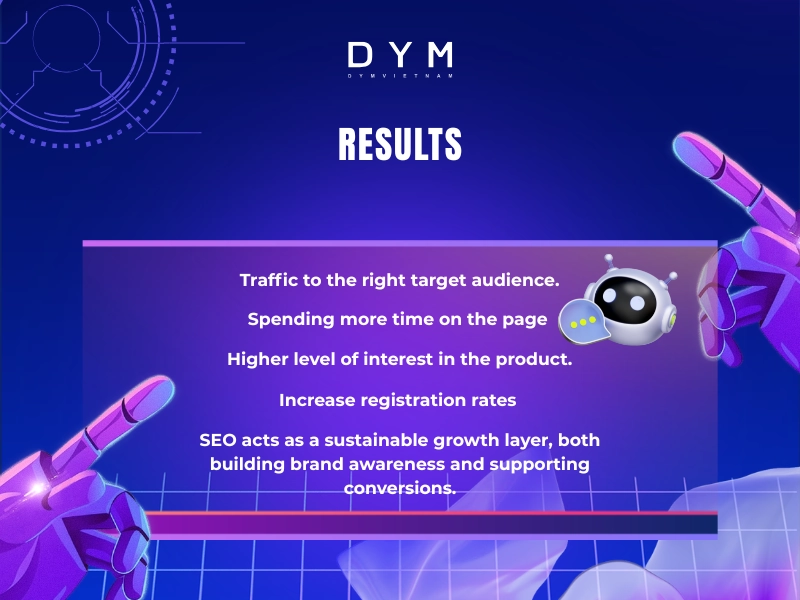
When implemented effectively, the impact of AI SEO in the credit card industry goes far beyond increased traffic. More importantly, the traffic becomes more qualified, users spend more time engaging with the content, interest in products increases, and conversion rates improve significantly.
Most importantly, businesses become less dependent on paid advertising as the sole source of lead generation. SEO begins to function as a sustainable growth engine — strengthening brand visibility while consistently supporting conversions.
Strategic Takeaways
AI SEO in the credit card industry is not simply about using AI to produce content faster. It is about building a strategic content ecosystem that reduces perceived risk, strengthens trust, and guides users toward confident financial decisions.
Businesses that focus only on traffic often become trapped in vanity metrics and page views. In contrast, companies that build a clear, funnel-driven content strategy gain a far stronger long-term competitive advantage.
AI SEO Solutions for Financial Businesses
To achieve real results with AI SEO in the credit card industry, businesses need a comprehensive strategy that combines SEO to attract the right audience, content to build trust, landing pages to drive conversions, and advertising to support remarketing efforts.
DYM Vietnam – Integrated AI SEO & Advertising Solutions
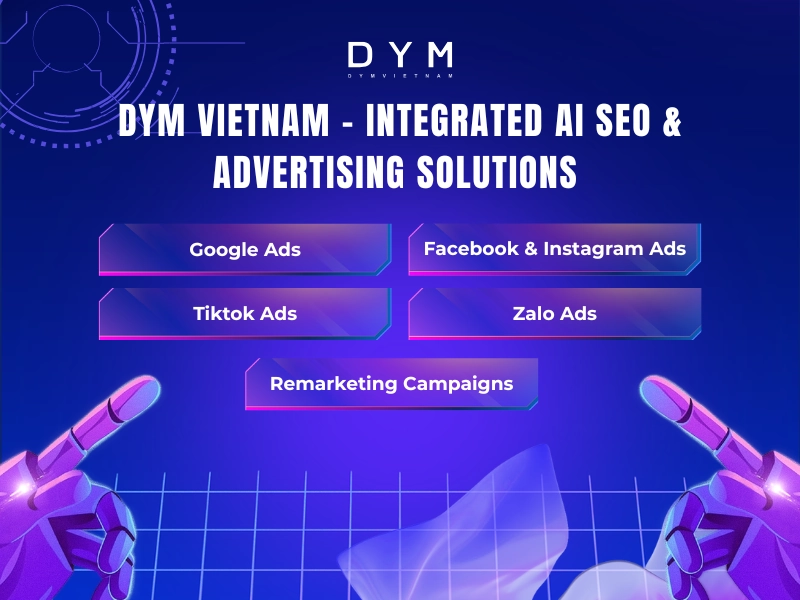
With more than 10 years of experience in the Japanese market, DYM Vietnam provides integrated multi-platform advertising solutions through a professional, performance-driven, and transparent approach.
Our services include Google Ads (Search, Display, and YouTube), Facebook & Instagram Ads, TikTok Ads, Zalo Ads, and Remarketing Campaigns — helping businesses reach the right audience at every stage of the customer decision journey.
One of the key advantages of partnering with DYM Vietnam is our ability to deliver customized strategies tailored to each business objective. Our team of specialists brings extensive expertise in SEO, SEM, and Digital Advertising, supported by transparent reporting systems that clearly measure campaign performance. In addition, continuous budget optimization helps maximize ROI in a practical and sustainable way.
This creates a strong foundation for businesses not only to improve SEO performance, but also to fully leverage LLMO as part of a comprehensive marketing strategy.
Conclusion
In the credit card industry, AI SEO does more than help businesses gain greater visibility on Google. More importantly, it helps brands become more trustworthy in decisions that directly impact personal finances.
When implemented strategically, AI SEO is far more than a content tactic. It becomes a scalable growth system where data, search behavior, and conversion strategy work together to generate high-quality leads.
DYM VIETNAM’s “ SEO Services” page here.


Mục Lục Table of content
- Categorizing Search Intent Based on Financial Behavior
- Building Funnel-Based Content Instead of Keyword-Driven Content
- Using AI to Address Customer Objections Instead of Simply Generating Content
- Personalizing Content for Different Customer Segments
- Optimizing Landing Pages as Decision-Making Hubs
- Combining SEO with Remarketing to Increase Conversion Potential